
Automating Construction
We 3D print buildings on site, from local materials.
Robotics, materials science and software developed as one on-site system — so structures go up in place, printed from what the region can already supply.
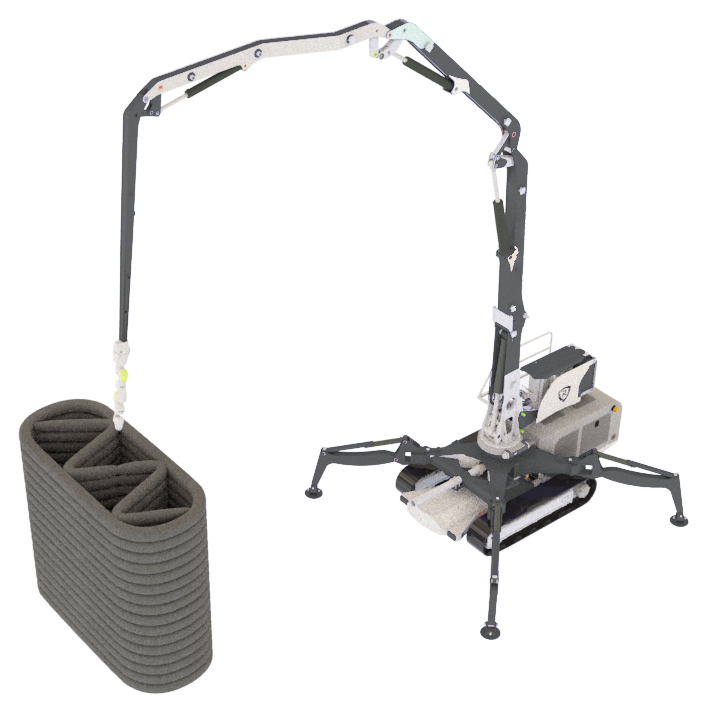
Four disciplines, developed as one system.
Construction-scale printing fails at the seams between hardware, material and control. AUTOCON develops all four in-house.
Robotics
A mobile boom-arm platform with a proprietary vision system that recognises uneven terrain.
Robotics →Materials
A universal toolkit spanning polymers, cementitious systems, geopolymers and foams.
Materials →Mechanics
The infusion press that blends universal polymer with locally-sourced material into a composite filament.
Mechanics →Software
The control layer that keeps a print predictable once it leaves the model and meets a real site.
Software →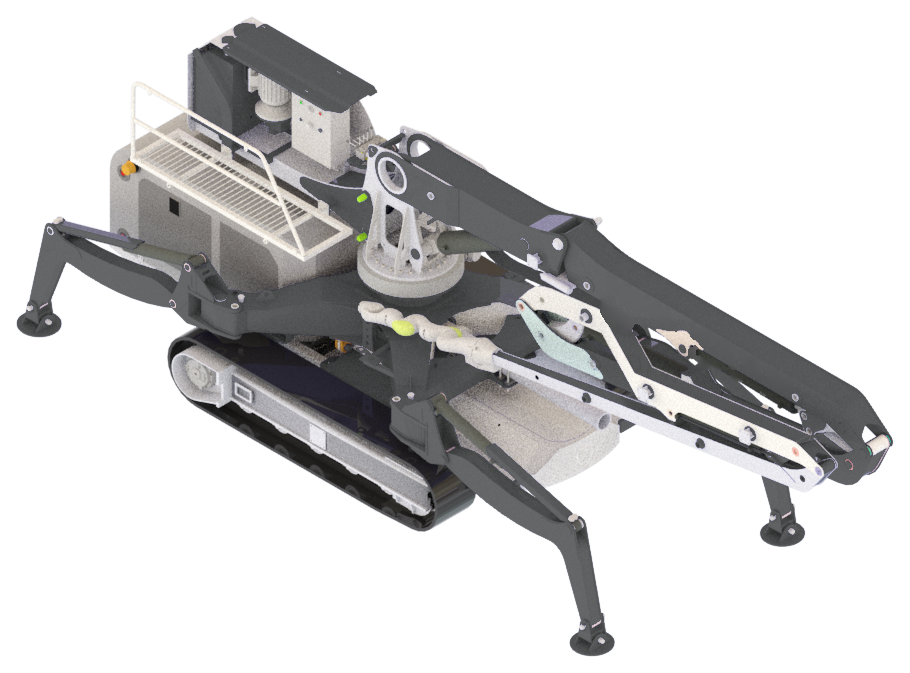
Mobile Robotic System
A 55-foot boom arm that adapts to the terrain it prints on.
The platform carries a large-scale robotic boom arm to the site and prints structures in place. A proprietary vision system recognises uneven terrain, so the machine adapts to real ground instead of waiting for a prepared pad.
- Boom reach
- 55 ft
- Vision
- Proprietary terrain recognition
- Deployment
- On-site, mobile
Deployment · Concept
Arrives in a container. Drives out. Prints.
A factory that travels to the structure instead of the other way round.
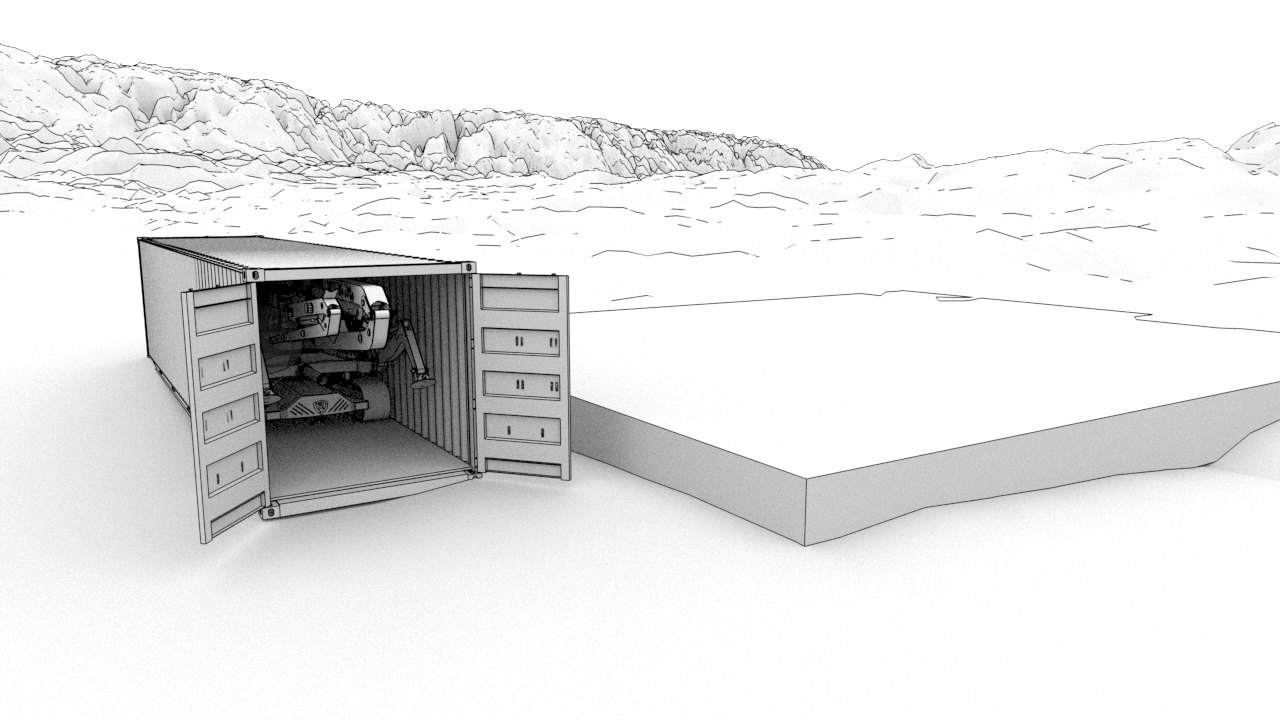
The system arrives by container and is set down beside the prepared slab.
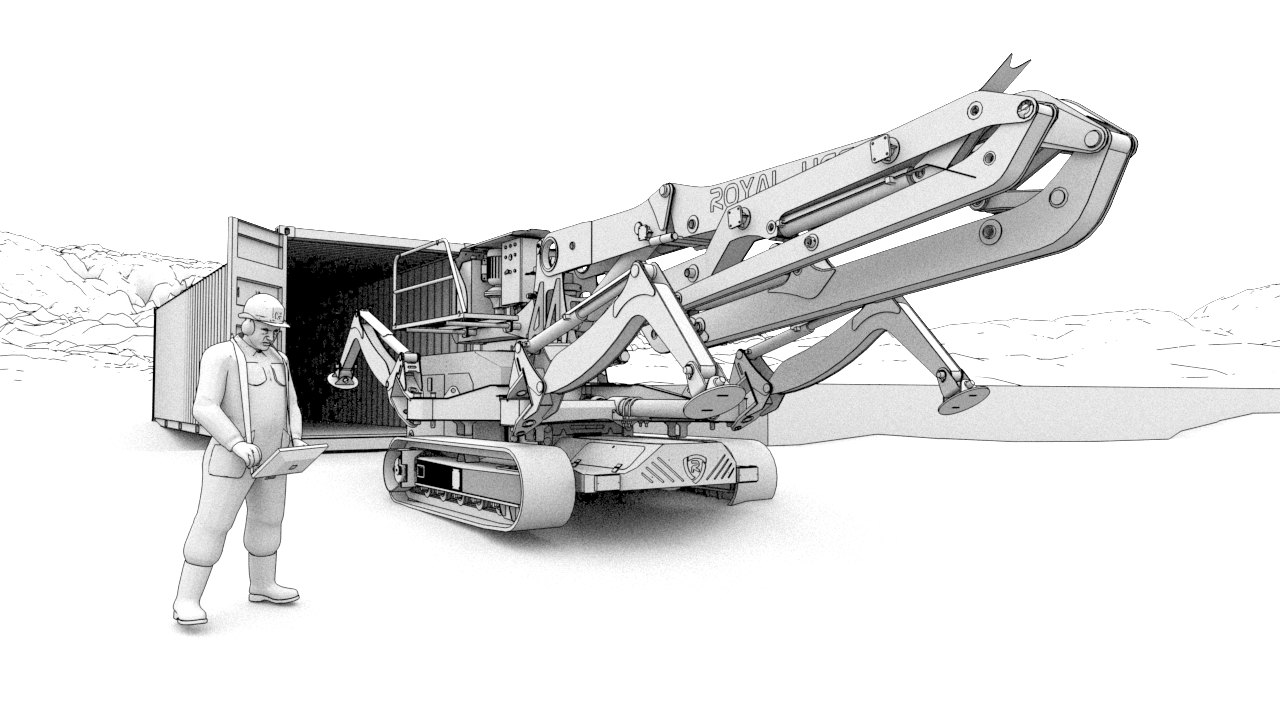
Doors open and the machine drives out under its own power, boom still folded.
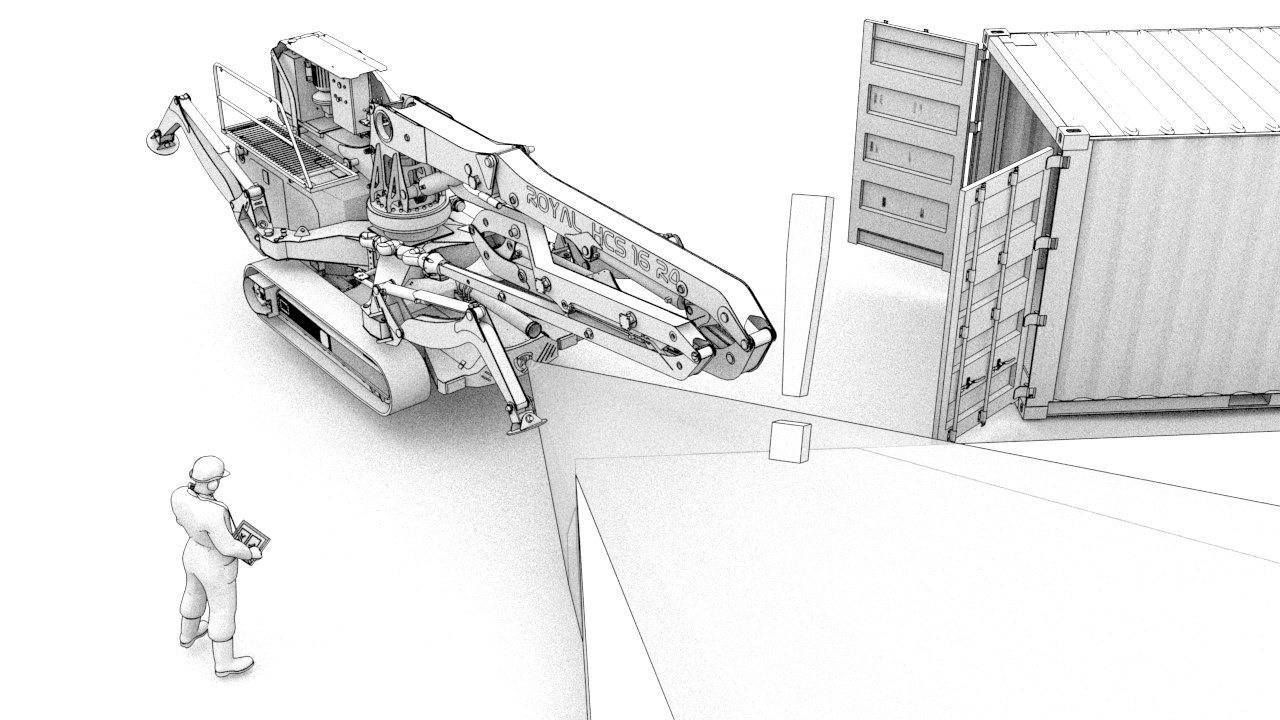
Clear of the container, the arm articulates out and the operator takes control.
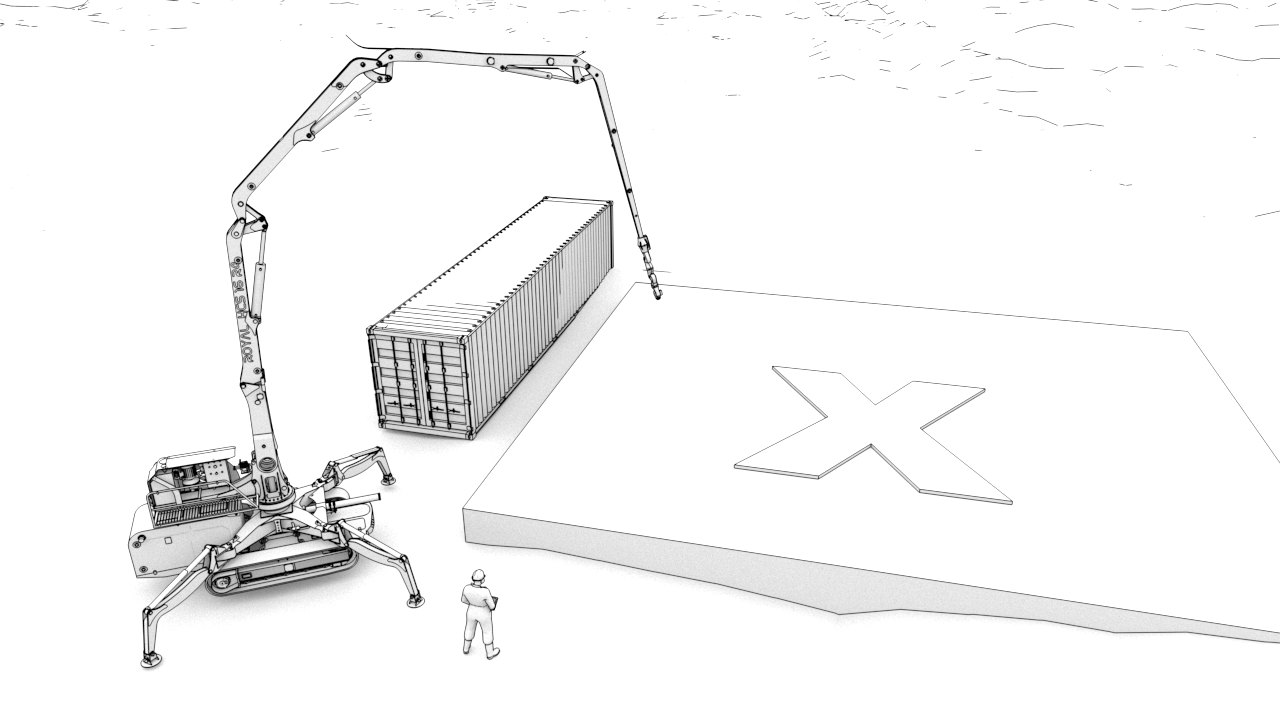
Outriggers down, the boom reaches across the slab and begins laying the structure.
Universal Material Toolkit
One material toolkit, adapted to what each site can supply.
Six material families, selected per project and per region, so a build leans on locally available resources instead of freight.

Thermoplastic polymers
Melt-processed, reheatable
Thermoset polymers
Chemically cross-linked cure

Cementitious systems
Hydraulic binder, aggregate

Geopolymers
Alkali-activated aluminosilicates
Structural foams
Low density, insulating

Elastomeric urethanes
Compliant, mineral-filled
Ship the printer. Source the materials locally.
Printing from locally available resources takes the freight out of the material budget and lets a structure be made of the region it stands in. Low-resource manufacturing, by design rather than by offset.
Low Resource Manufacturing
Collaboration
Developed through established research partnerships.
Alliances across academia, government and private industry form the bedrock of the technology, not a footnote to it.
Research partnerships that push materials and process science ahead of what a single lab can carry.
Institutional programs and testbeds that put construction-scale printing onto real ground.
Private partners who bring the constraints, the sites and the schedules a technology has to survive.





The Team
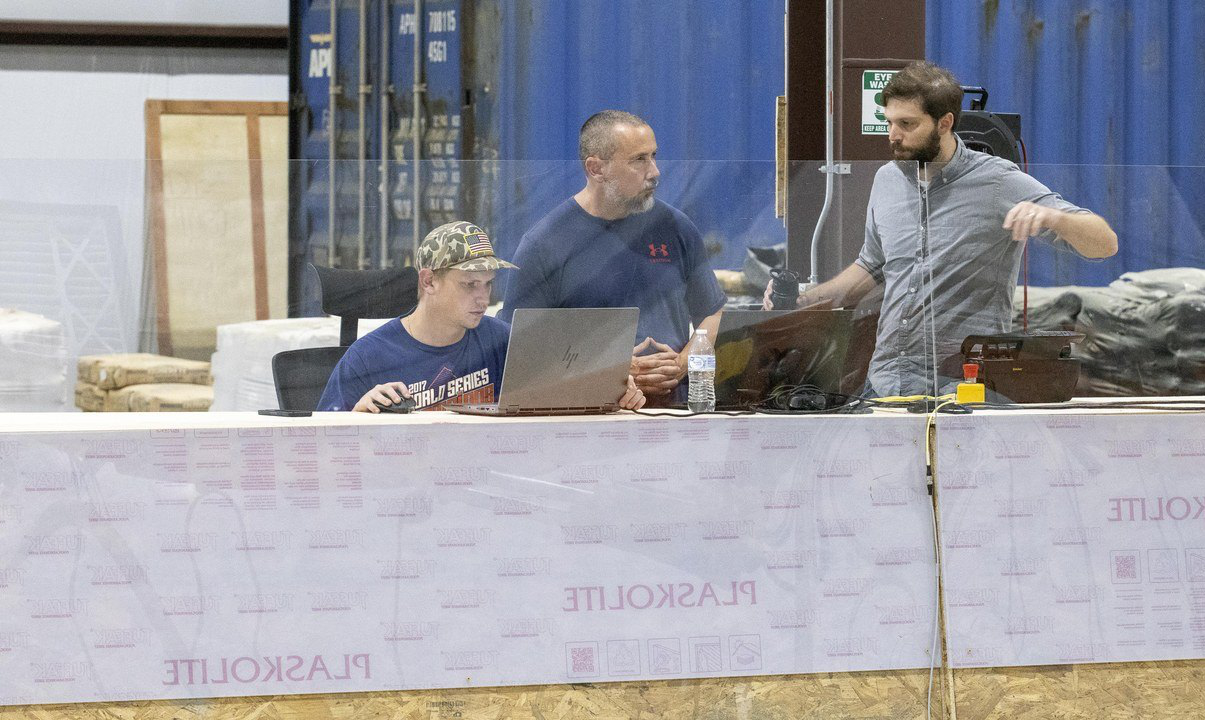
A multidisciplinary team of materials scientists, roboticists and software engineers.
The disciplines that usually sit in different companies sit on the same team here — which is the only way an integrated machine gets built. The robotics group includes former NASA engineers whose systems are operating on the International Space Station.
Work with AUTOCON
Have a site that needs a structure?
Tell us about the site, the structure and the constraints. We'll tell you what the machine can do.