
Technology
Four disciplines, developed as one system.
Materials, robotics, mechanics and software are usually sourced from four different vendors and integrated on site. We build them together, which is what makes printing a structure in place possible.
01 / Materials
A universal materials toolkit that works with local materials.
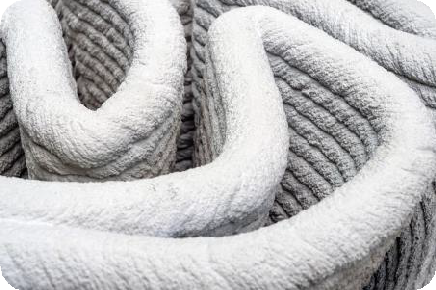
Our experience spans thermoplastic and thermoset polymeric systems, cementitious-based materials, geopolymers, foams, and elastomeric urethanes combined with inorganic fillers.
The point of a toolkit rather than a single formulation is adaptability: the material is chosen against the project, the climate and what is available within trucking distance — not the other way round.
Thermoplastic polymers
Melt-processed and reheatable
Thermoset polymers
Chemically cross-linked cure
Cementitious systems
Hydraulic binder with aggregate
Geopolymers
Alkali-activated aluminosilicates
Structural foams
Low density, insulating
Elastomeric urethanes
Compliant matrix, inorganic fillers
02 / Robotics
A self-propelled platform with a 55-foot robotic boom arm.
Four subsystems, each sized for a structure rather than a benchtop part.
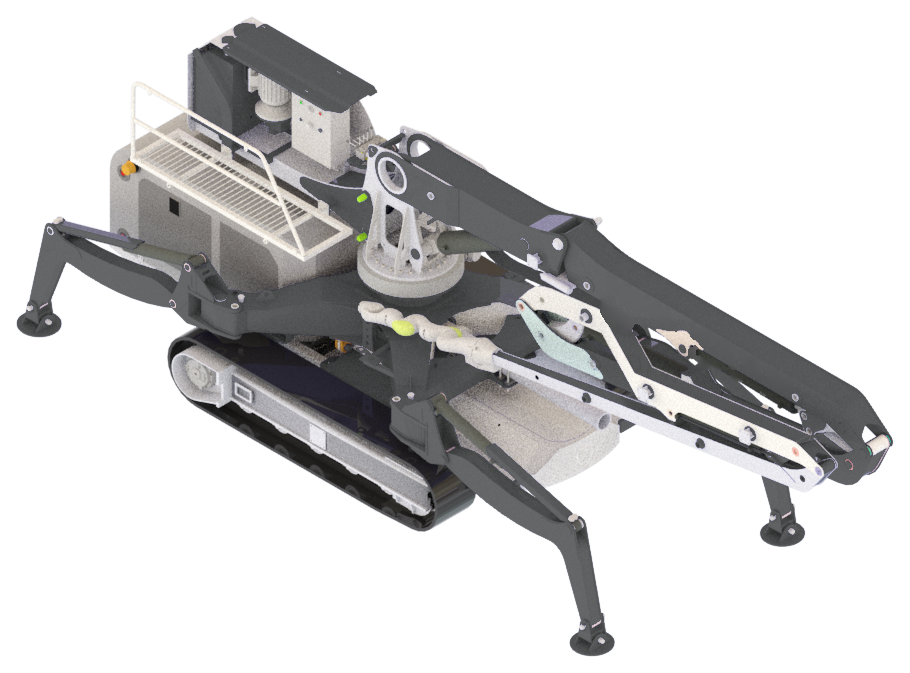
A tracked platform that brings the system onto the site and positions it against the structure, rather than requiring the structure to be built around a fixed gantry.
A 55-foot large-scale robotic boom arm, sized so a working envelope covers a building rather than a single wall panel.
The deposition end of the arm, matched to whichever material family the project calls for.
Proprietary terrain recognition that reads uneven ground, so the arm references the site as it actually is.
03 / Mechanics
An infusion press that turns polymer and local material into printable filament.
At the core of our Infusion Press Technology platform is the infusion press, an apparatus built to blend universal polymers with locally-sourced material. The composite filament it produces carries the strength and adaptability of the polymer, and the regionally-specific character of whatever the site can supply.
At the tip of the robotic arm sits AUTOCON's end effector — a purpose-built tool that redefines precision in construction-scale printing.
Contact us for details →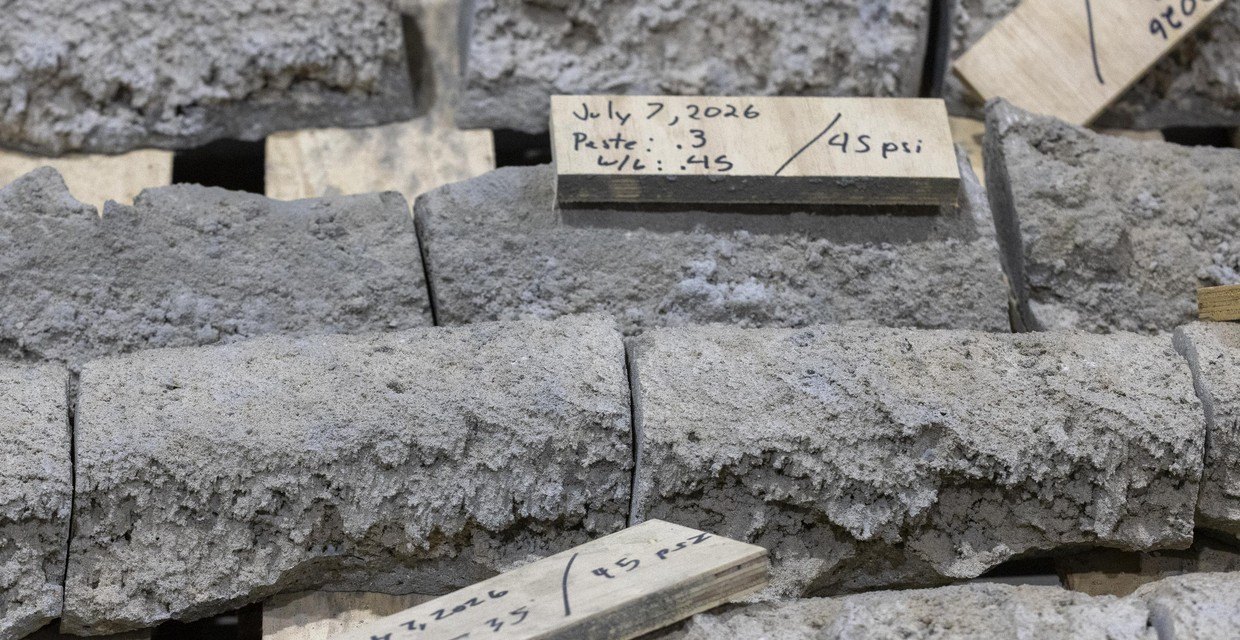
04 / Software
Software that plans each print and corrects it on site.
Software is the layer that keeps a print predictable once it leaves the model and has to contend with real ground and real material.
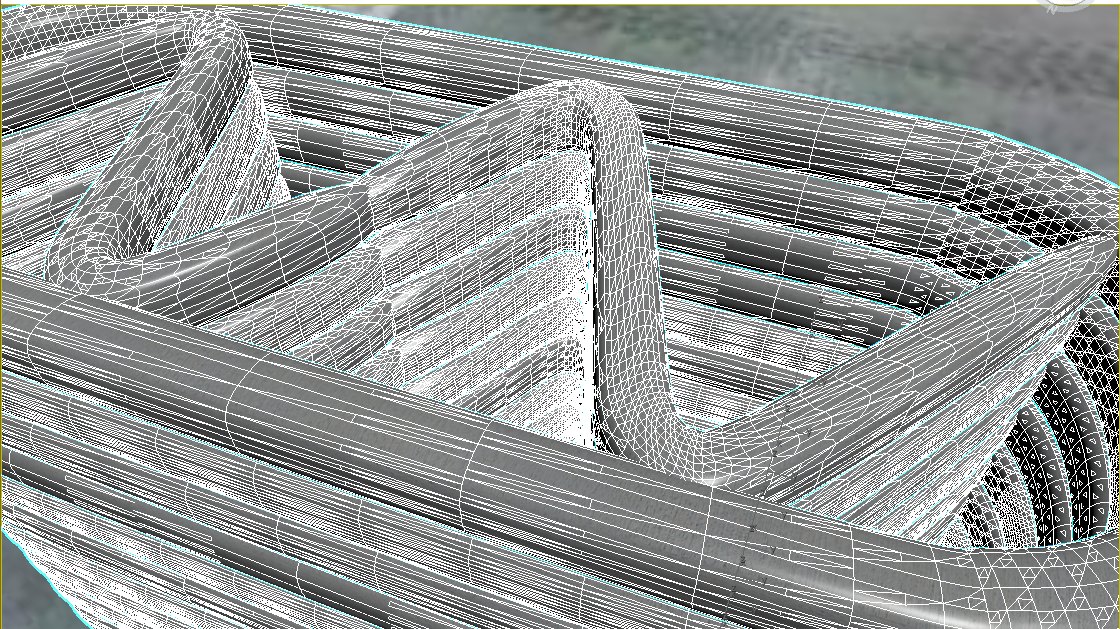
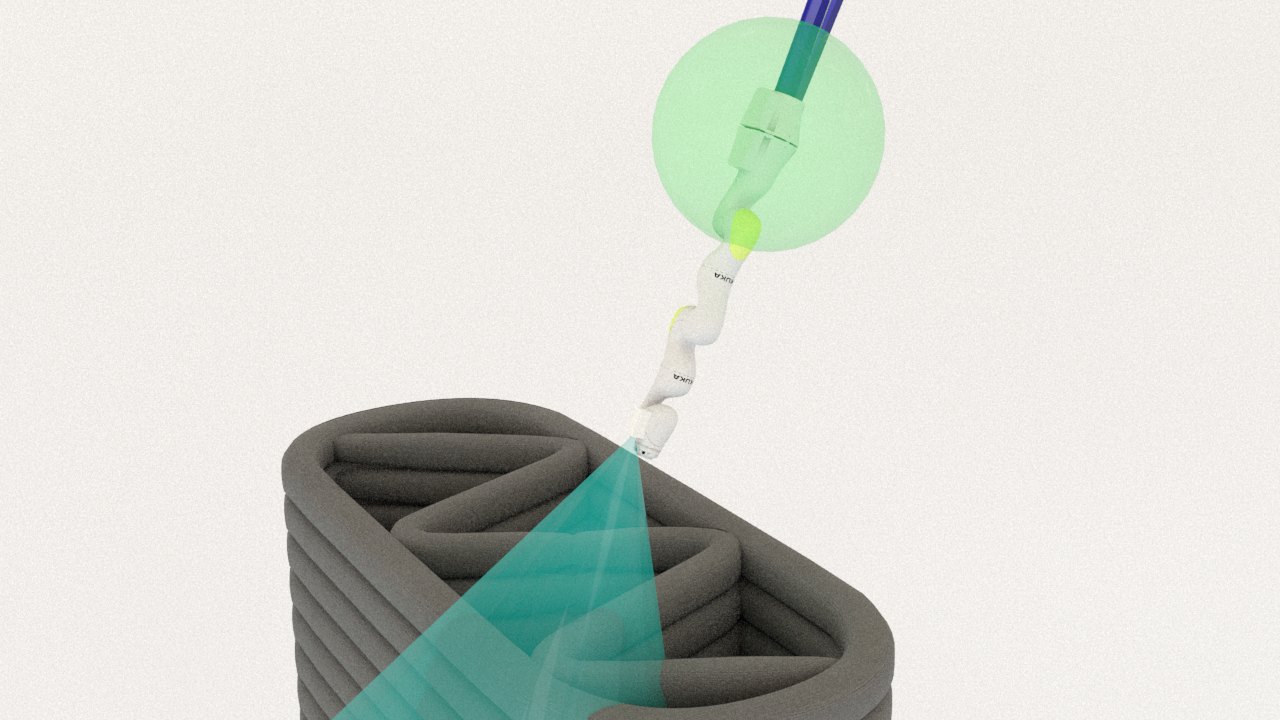
The vision system feeds back into the toolpath, which is what turns a nominal model into something that lands correctly on ground that was never flat to begin with.
Lower cost, shorter schedules, consistent quality.
An integrated approach cuts what is usually lost at the handoffs between trades and vendors.
A process that runs to a toolpath is a process you can schedule against with confidence.
Deposition under closed-loop control is repeatable in a way that hand-built work is not.
Work with AUTOCON
Have a site that needs a structure?
Tell us about the site, the structure and the constraints. We'll tell you what the machine can do.